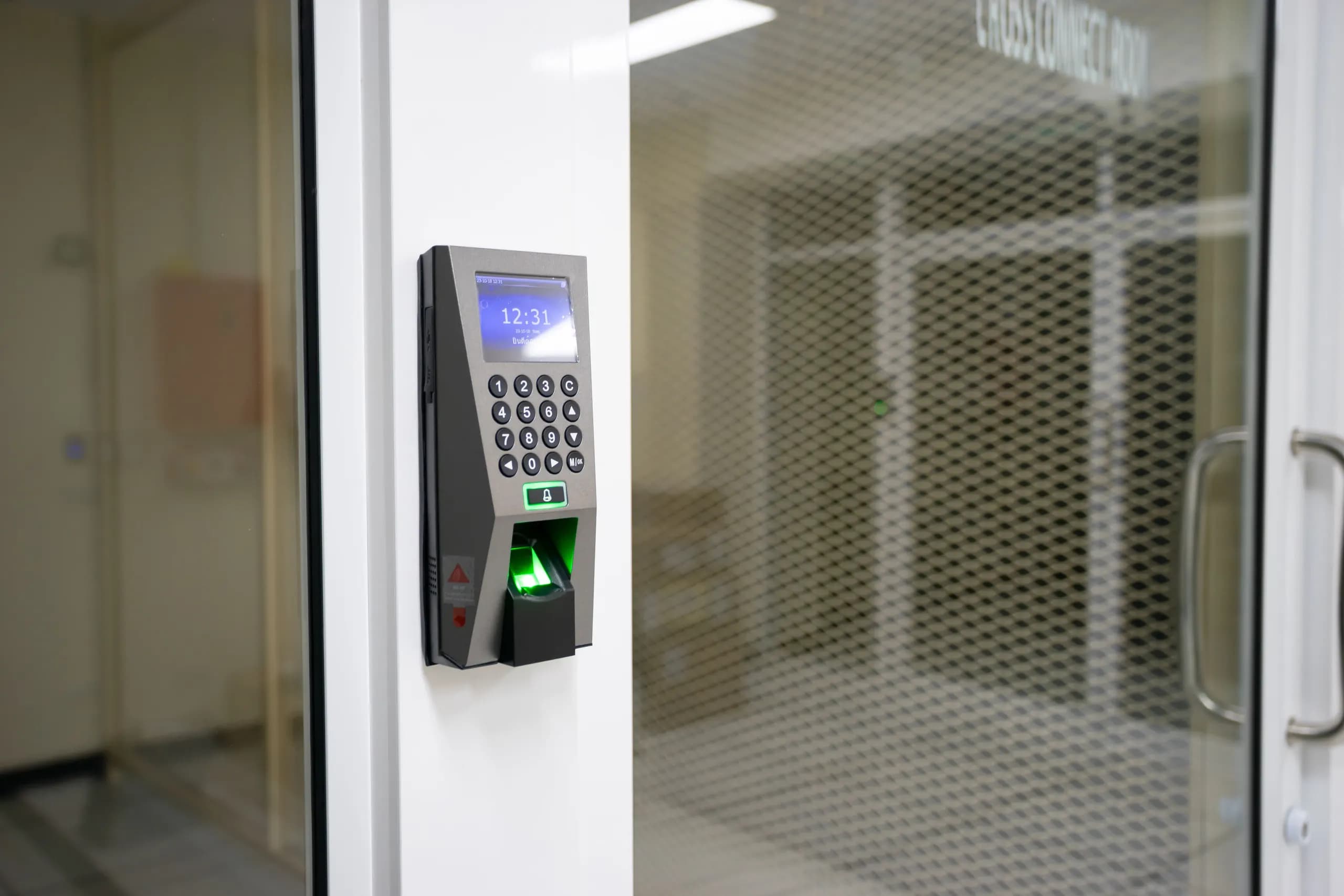
HIPAA 164.310(a)(2)(iii) access control and validation procedures, explained
Section 164.310(a)(2)(iii) asks covered entities and business associates to write and run procedures that control and validate who can physically enter facilities, based on their role or function. The specification also covers visitor control and control of access to software programs used for testing and revision. It is an addressable specification, so the organization must first decide whether the procedure is reasonable and appropriate. If it is not, the organization must document why and put an equivalent alternative measure in place where that is reasonable. The risk it addresses is unauthorized physical access to the rooms, racks, closets and workstations where ePHI systems run, since a person who can touch a server or a laptop can often bypass logical controls altogether. The organization owns this procedure. An implementation partner can help draft it and collect evidence, and an independent auditor can test it, but neither can decide who should have access to the server room.
The procedure is harder than it looks for three reasons. Roles change through hiring, transfers, contractor rotations and departures, so a list of badge holders can drift from the people who actually need access within weeks. Visitors, vendors and cleaning crews are often admitted informally at a front desk, with no record of who was escorted where. Test and revision access is the most overlooked part: development and staging copies of ePHI systems, lab consoles and maintenance laptops may sit outside the production access list entirely. Start by mapping every physical location and software environment that touches ePHI, then assign each role a documented access level. Confirm with your facilities team and your cloud or colocation provider what their access logs retain and how often they can be produced for review.
Practical decisions to make now include who approves access grants and removals, how often roles are re-validated, how visitor sign-in and escort rules are enforced, and who can approve access to software used for testing or code changes. Ask any partner to show how each decision will be recorded and how a sample of entries can be pulled for an assessor. Where the organization runs ePHI systems in a third-party facility, confirm in writing which physical access controls the provider performs and which remain with the organization. The HHS summary of the Security Rule and the NIST SP 800-66 Rev. 2 resource guide describe the key activities behind this specification and are a practical starting point for drafting the procedure.
Which facilities, visitors and test environments fall under this specification
Scope under 164.310(a)(2)(iii) follows two questions: where electronic protected health information (ePHI) is stored or processed, and who can physically reach the systems that hold it. The cards below cover the places where those two answers most often differ from what organizations first assume.
Data centers and server rooms
Any room that houses servers, storage arrays, backup appliances or network equipment carrying ePHI is squarely in scope. Your access validation procedures should name who may enter, how roles are checked before access is granted, and how entry is logged. Confirm that the list of people with badge or key access matches current job roles, and that contractors such as cleaning or electrical crews are covered by the same procedures.
Office space with ePHI workstations
Offices, clinics and back-of-house areas where workstations, laptops or printers can display or hold ePHI are in scope even when no server sits there. The question to answer is which roles need to reach those spaces and how staff without a need are kept out. Check that reception areas, shared rooms and after-hours access follow the same role-based rules as the rest of the facility.
Colocation and cloud facilities
Where a third party hosts your hardware, you still need to know who holds physical access rights and how those rights are exercised. If you have such rights, your procedures must cover them. If you do not, the physical controls of the cloud or colocation provider are a matter for that provider's own assurance documents, which your team should obtain and review. Record which facility controls you own and which you rely on the provider to perform.
Visitors and contractors
Visitor control is an explicit part of the specification, so sign-in, escort requirements and badge handling for guests, vendors and auditors need written procedures. Contractors who service equipment or install network gear usually need the same validation as employees, along with a record of when access was granted and removed. Ask whether visitor logs are retained and who reviews them.
Development, test and revision environments
The specification also covers control of access to software programs used for testing and revision. Test copies of an EHR interface, staging databases or build servers that hold real ePHI fall within scope, even though they are not production. Confirm which environments contain ePHI, who may modify code or configurations on them, and how that access is validated and recorded.
How to build role-based facility access and validation procedures
This sequence turns the addressable access control and validation specification into a working set of facility rules, from the inventory of physical access points through to a dated review record that shows the procedures are still operating.
Inventory facilities and physical access points
Start by listing every building, data room, network closet, records area and loading dock that houses systems or media holding ePHI, along with each door, badge reader, key cabinet and cage that controls entry. Facilities staff and the security official should walk each site together, because floor plans often omit closets and secondary doors. The output is a site and access point register that names the owner of each area. You know the step is done when every location that stores or processes ePHI appears on the register with its entry points.
Map roles and functions to physical areas
Build a role matrix that lists each job function, such as clinical staff, IT operations, facilities, cleaners, contractors and visitors, against the areas on the register and records whether each function needs access, escorted access or no access. HR and department managers confirm the job functions, and the security official approves the matrix. Document the reason for each grant so the access is traceable to a job need rather than convenience. The output is a signed role matrix, and the step is complete when every area has an explicit rule for every listed role.
Define how identity is validated at entry
Decide how a person is confirmed as the holder of an access credential before a door opens. Options include badge plus PIN, badge plus photo check by a guard, or sign-in with government-issued identification for contractors. The method should match the sensitivity of the area, and the procedure should say what happens when a credential is lost, shared or reported. Ask the physical security vendor to confirm in writing how the access system logs validation attempts and whether it can enforce role groups. The output is a validation method document, and the step is complete when the access system configuration matches that document.
Write visitor sign-in and escort rules
Set rules for who may visit, how each visit is recorded and when an escort is required. The visitor log should capture the visitor's name, organization, the person visited, the area, time in and time out, and the escort's name. Decide which areas never admit visitors without a staff escort and how visitor badges are returned. Reception or facilities staff keep the log, and the security official reviews a sample of entries. The output is a visitor log format and escort rule set, and the step is complete when staff have been trained on both and a blank log is in use at every controlled entry.
Set rules for access to test and revision systems
The specification also covers control of access to software programs for testing and revision. Identify the rooms, racks and consoles where test, staging or maintenance access to systems is possible, and state who may use them, under what change ticket and with which logged escort. Developers and vendors should not gain physical access to production hardware without a documented reason and a supervised session. The output is a test-access rule that cross-references the change management process, and the step is complete when each console or rack in scope has a named access list tied to a change or maintenance request.
Set a review cadence and record each review
Agree how often the role matrix, validation method, visitor logs and test-access lists will be reviewed, and who signs off. Compare current badge holders against the matrix, remove access for people who have changed roles or left, and sample visitor logs for completeness. The review record should show the date, reviewer, findings and corrections made. Because the specification is addressable, record also any decision to adopt an alternative measure and why. Confirm your chosen cadence against your own risk analysis and internal policy. The output is a dated review record, and the step is complete when the first review has been signed and its corrections tracked to closure.
How an assessor tests facility access validation under 164.310(a)(2)(iii)
This table lists the areas an assessor typically examines for 164.310(a)(2)(iii), the test each one involves, the evidence to prepare, and the gaps that come up most often. OCR audits and investigations rely on documents and observation, so the conclusions come from the assessor's own testing, not from any certificate the entity holds.
| Test area | What the assessor does | Evidence requested | Common findings |
|---|---|---|---|
| Written access validation procedure | Reads the procedure and checks that it states how role or function is confirmed before facility access is granted or changed | Dated, approved procedure with version history and named owner | Procedure exists but does not describe how validation happens in practice |
| Role-to-access mapping | Compares listed roles with physical access groups and samples staff to confirm access matches their function | Access matrix by role, badge or key group records, and sign-off for each change | Access granted by habit or copied from a former employee, with no role basis |
| Validation at entry | Observes entry points and asks staff to demonstrate how a badge, key or credential is checked against the role | Badge system logs, door controller configuration, and identity verification steps | Doors propped open, shared badges, or no review of logged entries for sensitive areas |
| Visitor control | Walks through visitor sign-in, escort rules and badge return, then reviews a sample of visitor logs | Visitor log with name, host, times and escort, plus visitor badge policy | Logs incomplete or missing, escorts not present in server or records areas |
| Access to software for testing and revision | Asks how staff gain physical or console access to systems used for testing or code revision, and checks the approval trail | Approval records for test and revision access, console or maintenance access logs, and list of authorized users | No defined approval for maintenance or test access, or vendor accounts never reviewed |
| Documented addressable decision under 164.306(d)(3) | Checks whether the entity assessed the specification as reasonable and appropriate, and if not, documented why and what equivalent measure applies | Written risk assessment entry, decision memo, and description of any alternative measure | Specification skipped with no assessment or justification on file |
Evidence that shows facility access validation works between audits
Access validation is only as credible as the records behind it. The six artifacts below connect the written procedure to the day-to-day trail of badges, visitors, approvals and test-environment reviews that an assessor will sample. Each one needs a named owner and a refresh rhythm, and each must match the access changes it describes.
Written access control and validation procedure
This is the documented procedure that states how facility access is granted, validated, changed and removed by role or function, and who performs each step. It is the anchor for 164.310(a)(2)(iii) because an assessor first asks whether the procedure exists and matches what staff actually do. Check that it names the roles covered, the systems that hold access data, and the escalation path when validation fails. Review it at least annually and after any change to facilities, badge systems or staffing structure. The security official or facilities lead typically owns it.
Role-to-area access matrix with approvals
The access matrix maps each role or job function to the physical areas, including server rooms, records storage and areas holding workstations or media with ePHI. Each mapping should carry a dated approval from the data owner or facility owner. Assessors often compare a sample of badge holders against this matrix, so mismatches are a common finding. Confirm that approval records exist for every grant, not just the initial rollout. Facilities and the security official usually share ownership, and the matrix should be reviewed whenever roles change.
Badge and key issuance and removal logs
Issuance and removal logs show when each credential was created, changed and revoked, and who authorized the action. For this specification, the removal side matters most: a departed employee's badge still active is a validation failure. Reconcile active credentials against the HR roster and contractor end dates at a set interval, and keep the reconciliation output. Confirm that the badge system can export logs for a chosen date range. Facilities operations usually owns the logs, with HR supplying the separation data.
Visitor sign-in and escort records
Visitor records capture the name, organization, host, purpose, arrival and departure times, and the escort assigned for areas where ePHI systems are housed. This evidence covers the visitor control element of the standard and shows that escorts were in place as the procedure describes. Sample entries against badge logs and camera records where they exist to confirm the trail is consistent. Ask whether visitor logs are retained long enough to cover an assessment window. The front desk or facilities team typically maintains them, and the security official should review exceptions.
Access review sign-offs for test and revision environments
The standard also covers control of access to software programs used for testing and revision. In practice, this means periodic sign-offs listing who can reach the physical consoles, racks or lab systems where test and change work happens, and who approved that access. Reviewers should check that access to production-adjacent test systems is limited to the people who need it for a named task. Record each review date, the reviewer and any removals made. The system owner or engineering manager usually signs off, with the security official confirming the review happened.
Addressable decision record
Because access control and validation is an addressable specification, the entity must document its assessment of whether the measure is reasonable and appropriate. If it adopts only part of the measure, the record must explain why and describe any equivalent alternative. This record is the evidence an assessor reads first when a control looks partial, so it should cite the risk analysis and the date of the decision. Under 45 CFR 164.306(d)(3), the decision must be documented, not just made. Confirm that the record is revisited when facilities change, and that the security official signs it.
Why an addressable specification still needs a documented decision
Addressable does not mean optional. Under 45 CFR 164.306(d)(3), an entity must first assess whether procedures to control and validate physical access by role or function, including visitor control and control of access to software programs for testing and revision, are reasonable and appropriate for its environment. If they are, the entity implements them. If they are not, the entity must document why and implement an equivalent alternative measure, provided that measure is reasonable and appropriate. The assessment itself is the required step, and it has to leave a record.
A sound assessment record names the specification, states the facility or facilities it covers, and describes the current state: which doors and rooms hold systems that touch ePHI, who holds badges or keys and by what role, how visitors are escorted and logged, and where test or staging environments run and who can change code on them. It then records the conclusion. If the procedure applies, the record points to the procedure and its owner. If it does not, the record explains the specific reason, such as a facility with no ePHI systems, and names the alternative, such as locked cabinets with logged keys and escorted vendor access. An illustrative record for a small clinic might say that its server closet is the only location housing ePHI, and that the closet's access list is reviewed by the security official. Missing records are a common finding, because an assessor cannot tell whether the entity considered the question at all.
The decision is not permanent. Revisit it when the facility changes, when a new site or colocation space is added, when headcount or contractor use shifts materially, or when the team begins testing against production-like data or moves software revisions through a new path. Each change should trigger a review of the existing record, not only a new one. Confirm the review cadence, the sign-off authority and the wording of the record with your compliance lead or counsel, since this page does not provide legal advice on how the standard applies to your organization.
Who owns the access procedure, who prepares the evidence and who issues the assessment
Your organization owns the access control and validation procedure. The HIPAA Security Rule places the duty on the covered entity or business associate, not on any vendor, so the decisions about who may enter which areas and who may touch software used for testing and revision must come from people accountable for the risk. Under the addressable approach in 45 CFR 164.306(d), your team also decides whether the specification is reasonable and appropriate for your facilities and, if not, documents why and selects an equivalent alternative.
- Role decisions: Set which roles or functions get which facility areas, based on job need, and approve exceptions.
- Visitor control: Define escort rules, sign-in practice and the areas visitors may never enter.
- Approvals and reviews: Approve the procedure, sign off access grants and removals, and review access lists on a schedule you document.
- Addressable decisions: Record the reasoning when a measure is not reasonable and appropriate and name the alternative you adopted.
Before engaging anyone, confirm internally who holds the security official role and who approves changes to the procedure.
An implementation partner prepares the working parts of the procedure and the evidence that shows it runs. DeployOpen, for example, prepares systems and evidence for compliance assessments, but it does not decide your role assignments and it does not issue audit reports or certifications. The partner's output is only as useful as the decisions your team has already made, so scope and approvals should be agreed in writing before work starts, in a fixed-scope engagement where possible.
- Role matrix: Translate your role decisions into a matrix that maps roles to facility zones and to software testing and revision environments.
- Validation method design: Specify how each access request is checked against the matrix, such as badge logs reviewed against an authorized list.
- Logs and evidence packs: Configure logging for physical access systems where they connect to open-source tooling, and assemble dated evidence packs.
- Tests with your team: Run walkthroughs that test the procedure with your staff, including a visitor scenario and a revocation scenario.
Ask the partner to state which parts of the work touch your physical access hardware and which remain your responsibility.
An independent auditor, assessor or certification body tests whether the procedure exists, operates and is evidenced. Nothing in the Security Rule requires a certificate, and HHS states that it does not endorse or recognize private certifications. Where an outside party issues a report, it reflects that party's testing at that point in time, and it does not by itself establish that OCR will find you compliant. The HHS Office for Civil Rights enforces the rule through complaints, compliance reviews and audits.
- Testing: Sample access grants, visitor records and access reviews, then compare them with your documented procedure.
- Findings: Report exceptions and gaps in writing, which your team must address.
- Scope limits: Confirm which facilities, systems and periods the assessment covers.
- Independence: Use an assessor that did not design the procedure, so the testing is genuinely separate from the implementation.
Before engaging an assessor, confirm the scope, the sample sizes and exactly what document, if any, they will issue.
What meeting facility access validation costs in money and effort
This table breaks down the cost and effort components of validating facility access under 164.310(a)(2)(iii), showing who is paid, whether each cost is one-time or recurring, what moves it, and what to request in a written quote. No figures are given because none were supplied, so use the table to build your scope and comparison questions before requesting quotes. The main takeaway is that recurring evidence upkeep and visitor handling usually cost more over time than the initial role design.
| Cost component | One-time or recurring | What drives it up or down | What to ask for in a quote |
|---|---|---|---|
| Access badge, key or lock systems and licenses | Hardware is one-time; licenses and support are usually recurring | Number of doors and zones, whether access is card-based or keyed, and whether the platform is cloud-hosted or self-hosted. Self-hosted tooling can reduce license spend but shifts server and patching work to your team. | Itemized hardware, per-door or per-user license terms, support hours, and whether logs can be exported in a format your assessor can sample |
| Staff time to define roles, zones and approvals | One-time, with periodic review | Number of job functions, how many distinct facility zones exist, and whether an access matrix already exists. Clear role definitions reduce rework during later reviews. | Named deliverables such as a role-to-zone matrix and approval workflow, the people involved, and the number of review rounds included |
| Visitor management process and tooling | Process design is one-time; staffing and visitor logs are recurring | Visitor volume, escort requirements, whether visitors are badged, and whether a sign-in system already exists. Higher volume increases front-desk and escort labor. | Written visitor procedure, escort ratios assumed, log retention approach, and who performs sign-in and log review |
| Access reviews and revocation work | Recurring | Staff turnover, contractor churn, and how quickly access changes are reported to facilities. Manual reviews grow with headcount. | Review frequency proposed, the systems compared in each review, and how terminations are linked to revocation records |
| Evidence upkeep and records retention | Recurring | Documentation volume, log retention periods set by your policy, and how many systems produce access records. Evidence gathered on demand costs more than evidence collected on a schedule. | Evidence list mapped to the requirement, collection schedule, storage location, and who maintains the records |
| Testing of physical controls | Periodic, often recurring | Facility size, number of entry points, and whether testing includes tailgating or social engineering scenarios. Scope expansion raises effort quickly. | Test scope in writing, rules of engagement, sampling approach, and the written report format |
| External review or third-party assessment | Periodic, usually recurring | Assessor selection, the depth of the review, and how ready your evidence is. Gaps found late increase re-testing effort. | Who performs the review, what is excluded, whether a readiness pass is included, and how re-testing is priced |
| Assessor sampling effort during audit | Recurring per assessment cycle | Number of facilities and zones sampled, how easily samples can be pulled from your logs, and whether records are consistent across sites. Clean, exportable records shorten sampling. | Confirm with your assessor which samples they will request and in what format, before fixing the scope of your preparation work |
Where organizations fall short on facility access validation and how to close each gap
Most facility access weaknesses under 164.310(a)(2)(iii) are not missing locks or badges. They are gaps between the written procedure and daily practice: roles that do not match real jobs, checks left to individual judgment, and records that stop being kept. Each card below names one gap, the fix, and the evidence an assessor would expect to see.
No role matrix that matches job functions
Access is often granted by copying a previous employee's badge or by a broad default group, so nobody can say why a given person can enter a server room. The fix is a written matrix that maps each role or job function to the specific physical areas it needs, including facilities, data halls, network closets and records rooms. Check whether the matrix was built from actual job duties, whether each area has a named owner, and whether badge groups in your access system match the matrix line by line. Evidence: the approved matrix, dated and signed, with a reconciliation against the access system export.
Validation that depends on reception judgment
When a receptionist decides by eye whether someone should be let into a restricted area, the control depends on who is on shift that day. The fix is a defined validation step for each restricted area: photo ID checked against an approved list, a badge scan, or escort confirmation from a named employee, with the step written into the procedure. Confirm that staff know which steps apply to which area and that exceptions go to a named approver. Evidence: the written validation steps, the approved access list, and logs showing the step was completed for sampled entries.
Incomplete or missing visitor logs
Visitor logs that record only a name, or that are skipped during busy periods, leave no proof of who entered sensitive areas or when. The fix is a visitor sign-in standard covering name, organization, host, purpose, time in and out, and escort assignment, applied to contractors, vendors and auditors alike. Test the process by sampling recent visits and checking that each entry is complete and that escorts were recorded for restricted zones. Evidence: the completed visitor log, badge issuance records for visitors, and escort assignment records.
Test and revision environments outside the procedure
Developers and vendor engineers often reach software test, staging or revision systems through a separate console, rack or lab that never appears in the facility access procedure. The rule addresses control of access to software programs for testing and revision, so these environments belong in scope even when they sit in ordinary office space. The fix is to inventory every physical location and console from which test or revision software can be reached, then assign each to the access matrix and visitor rules. Confirm with engineering whether any shared credentials or unattended sessions exist at these points. Evidence: the inventory, the access rules applied to each location, and the session records or sign-in logs for those consoles.
Addressable decisions left undocumented
Because access validation is addressable, the entity must either implement it or document why it is not reasonable and appropriate and adopt an equivalent alternative measure. Many organizations apply a control informally or skip the assessment entirely, which leaves nothing to show an assessor. The fix is a short written decision record for this specification: whether validation is implemented, the reasoning for each choice, the alternative measure if one is used, and the review date. Ask who signed the decision and whether it reflects the facility as it exists today. Evidence: the signed decision record and the risk analysis entry it relies on, as described in 45 CFR 164.306(d).
Access not reviewed after staff or vendor changes
Access lists tend to grow over time as people change roles, contractors finish projects, and vendors rotate staff, while removals lag behind. The fix is a defined trigger for review: each hire, transfer, contract end or vendor personnel change prompts a check of physical access against the matrix, with removals completed on a stated schedule. Test by comparing the current access list to recent personnel and vendor changes and looking for people who no longer need their access. Evidence: periodic access review records with reviewer sign-off, termination and vendor offboarding tickets, and removal timestamps from the access system.
What buyers ask about cost, effort and outside help for facility access validation
How much effort does facility access validation take in-house?
The effort depends on how many facilities, server rooms and access points hold ePHI systems, and on how many roles need access. No researched figure for hours or staff time is available, so ask your team to estimate the work by stage: mapping which spaces hold ePHI systems, defining access by role or function, writing visitor and escort procedures, setting up a process for validating access to software used for testing and revision, and keeping records current. The work is mostly one-time setup followed by recurring reviews of access lists and visitor logs. Facilities, IT and the security official each carry part of it, so the effort is spread across teams rather than sitting with one person.
Does a HIPAA Security Rule project need an outside partner?
The Security Rule does not require an outside partner, and the covered entity or business associate owns the control. Many organizations do the work in-house. A partner is useful when the team lacks facilities, physical security or HIPAA documentation experience, or when several sites and cloud-hosted systems need consistent procedures. An implementation partner such as DeployOpen can prepare systems, access records and evidence for a fixed scope, but it does not decide whether a procedure is reasonable and appropriate for your organization. That decision and the documentation remain with your organization, and only an independent assessor can issue an assessment report.
How long does this work usually take, and what drives the timeline?
No researched duration exists for this specification, so confirm timing with your own facilities and security teams and with any partner's written scope. The main drivers are the number of sites, whether access is controlled by badge systems that already produce logs, how many roles and vendors need access, whether visitor processes already exist, and how much existing documentation can be reused. Delays usually come from unclear ownership of physical spaces, incomplete inventories of ePHI systems, and waiting for approvals on new procedures. Ask any partner to show the stages, dependencies and client tasks in the written scope before work starts.
What does the work need from our team?
The work needs named owners from facilities management, IT, the security official and the business units that use ePHI. Facilities must confirm which rooms and cabinets hold systems and media. IT must supply the list of systems and the people who administer software used for testing and revision. HR or the business owner must provide role definitions, so access can be granted by role or function. Someone must approve the written procedures and collect the access logs, visitor records and sign-off evidence over time. Without these inputs, a partner cannot produce accurate procedures or evidence.
Does a third-party assessment prove HIPAA compliance?
No. A third-party assessment can test specific controls and show what was observed on a given date, but it cannot prove HIPAA compliance or issue a HIPAA certificate, because none exists. HHS has stated that no Security Rule standard requires certifying compliance and that it does not endorse or recognize private certifications, and that such certifications do not prevent HHS from later finding a violation. Treat any assessment as evidence for your own risk analysis and for customer or regulator questions. Ask the assessor to state exactly what was tested, the sample, and the period covered.
What happens if the addressable decision for access validation is missing?
Access validation is an addressable specification, which means it is not optional to consider. Under 45 CFR 164.306(d)(3), your organization must assess whether the procedure is reasonable and appropriate. If it is, you implement it. If it is not, you must document why and implement an equivalent alternative measure if that is reasonable and appropriate. A missing decision record is a documentation gap that an OCR investigator can examine, even if access controls already exist. Record the assessment, the reasoning, the alternative measure and the date it was approved, and review that record when facilities or roles change.
How often should facility access validation procedures be reviewed?
The Security Rule does not set a fixed review interval for this procedure in the sources available for this topic, so confirm your review cycle with your security official and any assessor. A practical approach is to review procedures when facilities change, when roles or vendors change, after a security incident, and on a scheduled cycle set by your policy. Access lists and visitor logs need more frequent checks than the written procedure. Keep dated revisions, because documentation under the Security Rule must be kept current and retained for six years.
How DeployOpen works on this
DeployOpen plans and implements self-hosted open-source platforms inside your own facilities, cloud accounts or data centers, and prepares the access control procedures, visitor records and system evidence that 164.310(a)(2)(iii) asks you to show. Your organization decides whether the standard is reasonable and appropriate for its environment, and an independent assessor reviews what you produce.
How we scope
- The written scope lists each facility, server room and software environment where access must be controlled and validated.
- We record which roles or functions need physical access, and which need access to test or revision software environments.
- Visitor control, escort rules and access request workflows are named in scope, so responsibilities are agreed before work begins.
How we build
- We configure badge or key systems, access lists and visitor logging using open-source tooling your facilities team can operate, where your environment supports it.
- We document the role-based access matrix and the validation steps that compare granted access against current staff records.
- We test that revoked access is removed from physical entry points and from software testing and revision environments.
How we hand over
- You receive the written access control and validation procedures, the access matrix, and the visitor log format.
- Evidence packages include sample access reviews, change records and test results that show the procedures run as written.
- Your security official and facilities owner get a walkthrough, and open items are listed with owners for confirmation.
How we support
- Ongoing support, upgrades and periodic access reviews are available as a retainer after handover.
- Your organization confirms with its own counsel and assessor whether the addressable decisions and any alternative measures are documented correctly.
- Changes to facilities, staffing or access platforms trigger updates to procedures and evidence under the agreed scope.
